
SpeciesEmperor scorpion
Emperor scorpion
Pandinus imperator
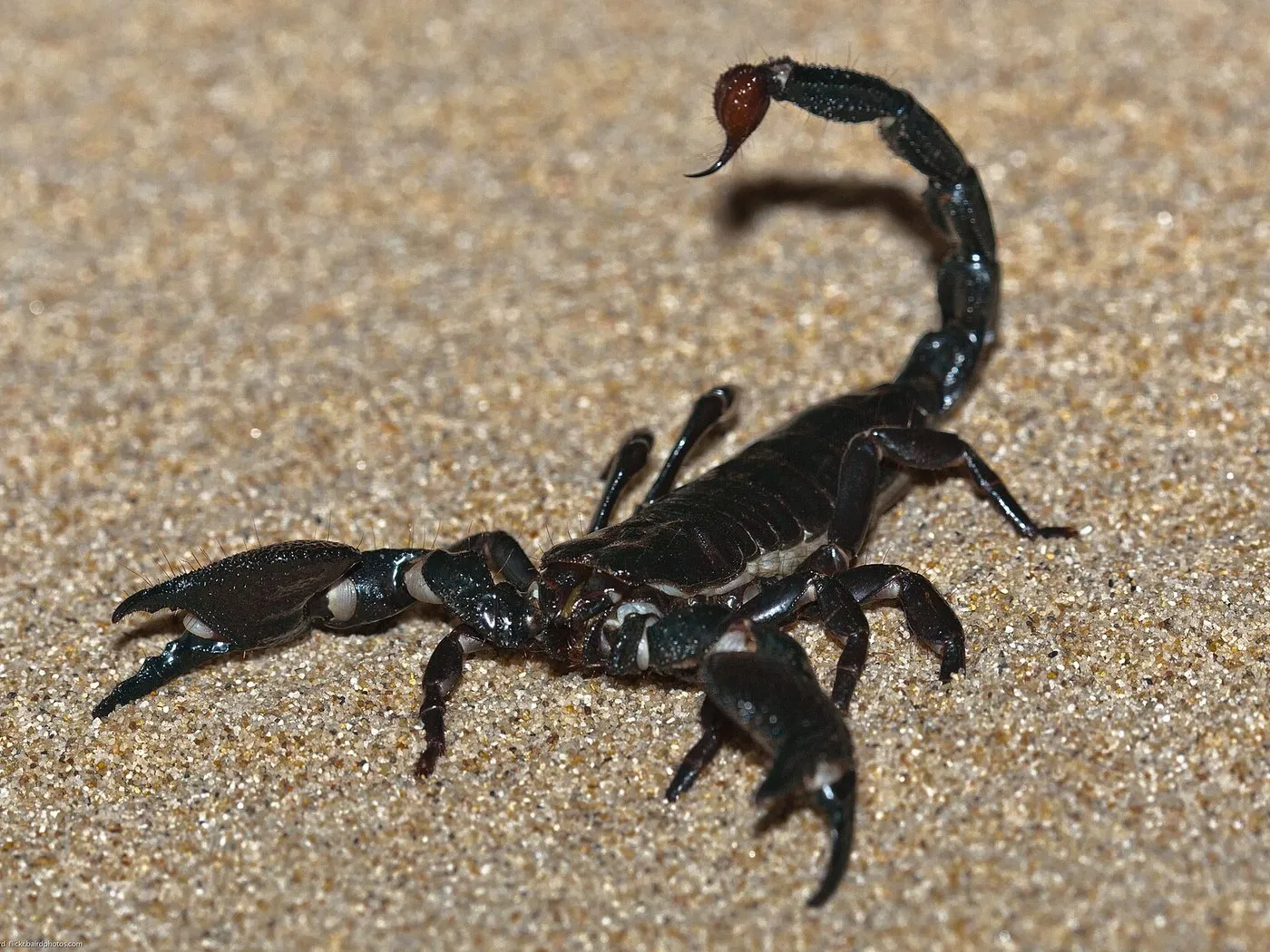
One of the largest scorpions in the world, deep black and with comparatively weak venom: It grabs with its claws rather than stinging. A beginner's animal that one only watches.
- Group
- Scorpion
- Level
- Beginner
- Origin
- West Africa
Where the species comes from
- World region
- West Africa
- Countries
- Ghana, Togo, Benin and Nigeria
- Habitat
- Humid rainforests, under leaf litter and dead wood
The app does not yet hold an origin entry for this species. The distribution given here comes from the specialist literature.
The natural habitat is the yardstick for how you furnish an enclosure. Knowing where an animal comes from is knowing why it needs heat zones, hides and a particular humidity.
Husbandry at a glance
The same details appear in the animal’s profile inside the app.
- Enclosure
- 60 × 40 × 40 cm for one animal, with deep substrate.
- Temperature
- 26–30 °C by day, 22–24 °C at night.
- Humidity
- 70–80 %, substrate permanently moist.
- Lighting
- No lighting needed; nocturnal.
- Substrate
- At least 15 cm of moist coco-soil mix for digging.
- Furnishings
- Cork tubes, pieces of bark, leaf litter. The scorpion digs itself a burrow.
- Water
- Shallow dish, always filled.
- Feeding
- One to two insects per week.
- Behaviour
- Nocturnal, digs, lies in wait at its burrow. Under UV light the carapace glows blue-green.
- Handling
- Do not handle. The claw grip is painful; the sting is usually harmless to a healthy adult, but allergic reactions are possible.
- Cohabitation
- Group keeping is possible in this species if space and hides suffice. Among scorpions that is the exception.
- Health
- Sensitive to dryness; if humidity is too low the moult fails.
- Seasonal cycle
- No rest period needed.
- Safety
- No keeping permit under the Ordinance: It does not cover arachnids. Cantonal rules may apply to venomous animals; check before buying. The species is CITES-protected.
Legal position in Switzerland
No permit foreseen
No keeping permit under the Ordinance: It covers vertebrates, cephalopods and decapods, not arachnids. Cantonal rules may exist for venomous animals; check with the cantonal veterinary office before buying
No certificate of competence foreseen
No proof of competence required. It is only demanded for the animals named in Art. 89 of the Ordinance
Species protection applies
CITES Appendix II: Import and transfer only with papers. Much of the trade consists of wild-caught or farm-bred animals from West Africa; when buying, ask for the origin and papers
Minimum enclosure dimensions
The Animal Welfare Ordinance does not apply to these animals: under Art. 1 it governs the handling of vertebrates, cephalopods and reptant decapods. There are therefore no minimum dimensions. Housing, climate and places to retreat should still match the needs of the species. The cantonal veterinary office can say whether cantonal rules apply, for example to venomous animals.
What the enclosure must provide
Deep, permanently moist substrate for digging, a hide, water, an escape-proof closure.
Paperwork
Keep the CITES papers and the receipt. Cantonal rules may apply to venomous animals: Check with the cantonal veterinary office before buying.
These details are a guide, not legal advice. Binding information comes from the cantonal veterinary office; the text of the ordinance is what counts. More on the legal position

.jpg)