
SpeciesRidge-tailed monitor
Ridge-tailed monitor
Varanus acanthurus
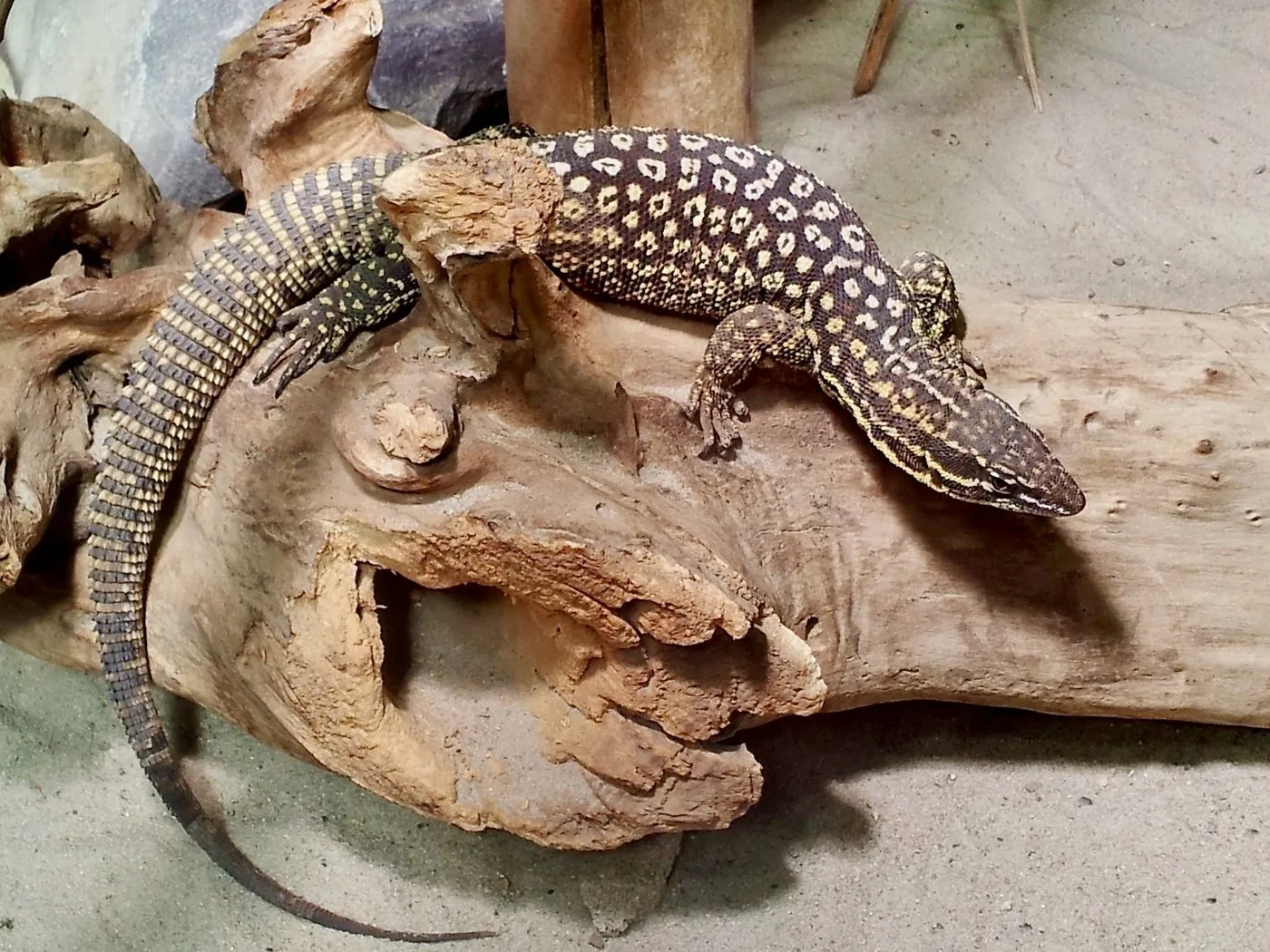
One of the smallest monitors in the hobby and one of the few that may be kept without a permit. Clever, active and curious, correspondingly quick to become under-stimulated.
- Group
- Lizard
- Level
- Advanced
- Origin
- Australia
Where the species comes from
- World region
- Australia
- Countries
- Northern and western Australia
- Habitat
- Dry rocky areas with crevices and termite mounds
The app does not yet hold an origin entry for this species. The distribution given here comes from the specialist literature.
The natural habitat is the yardstick for how you furnish an enclosure. Knowing where an animal comes from is knowing why it needs heat zones, hides and a particular humidity.
Husbandry at a glance
The same details appear in the animal’s profile inside the app.
- Enclosure
- 180 × 90 × 90 cm for one animal, with deep digging substrate and a climbing section.
- Temperature
- Spot basking at 50 °C, ambient 28–32 °C, cool corner 24 °C, 22 °C at night.
- Humidity
- 50–60 % in the substrate, drier above.
- Lighting
- Strong UV-B, twelve hours.
- Substrate
- 30–40 cm of moist loam-sand mix; it digs long, stable tunnels.
- Furnishings
- Stone stacks with narrow crevices, cork tubes, climbing branches. Enrichment is not a luxury for monitors.
- Water
- Large dish for bathing.
- Feeding
- Insects, occasionally eggs and small rodents. Two to three times a week; obesity comes quickly.
- Behaviour
- Diurnal, very alert, explores tirelessly. Recognises keepers and routines.
- Handling
- Habituation is possible, force does harm. Powerful claws and a strong bite.
- Cohabitation
- Alone or as a compatible pair given enough floor area and several hides.
- Health
- Obesity from overly generous feeding is the biggest problem in human care.
- Seasonal cycle
- Six to eight weeks of a drier, cooler phase with a night-time drop to 18–20 °C. The ridge-tailed monitor lives in the arid regions of north-western Australia, where winters are mild and dry. Feeding is reduced during this time, not stopped.
- Safety
- Monitors over one metre in total length require a permit under Art. 89 of the Ordinance and proof of competence. Varanus acanthurus stays below that at 60–70 cm. The length of the individual animal is what counts; when in doubt, ask the cantonal veterinary office.
Legal position in Switzerland
No permit foreseen
No permit. Art. 89 let. f of the Ordinance covers monitors only from an adult total length above 1 m; Varanus acanthurus stays below that at 60 to 70 cm. Mitchell's and the rusty monitor are named explicitly, this species is not
No certificate of competence foreseen
No proof of competence required. It is only demanded for the animals named in Art. 89 of the Ordinance
Species protection applies
CITES Appendix II: Import and transfer only with papers. When buying, ask for proof of origin and captive breeding
Minimum enclosure dimensions
Annex 2, table 5 of the Animal Welfare Ordinance does not list this species. Among snakes the table names only giant snakes (pythons and boas), elapids, vipers and pit vipers, and a few venomous or dangerous colubrids; for the rest no figure appears there.
The general rule in Annex 2 (letter K) then applies: the enclosure must be large enough for everything the species needs (hides, basking spot, climbing branches) to be arranged sensibly. As a yardstick, the ordinance points to expert opinions on a scientific basis. There is therefore no binding figure. The guide values in the calculator come from the 1997 expert report. Binding information comes from the cantonal veterinary office.
What the enclosure must provide
Provide species-appropriate heat and light zones, UV-B where needed, suitable substrate, retreats, climbing or digging options, water and natural rest periods.
Paperwork
Keep the purchase contract and proof of origin. Use the scientific name to check CITES and import status reliably.
These details are a guide, not legal advice. Binding information comes from the cantonal veterinary office; the text of the ordinance is what counts. More on the legal position

