
SpeciesMadagascar tree boa
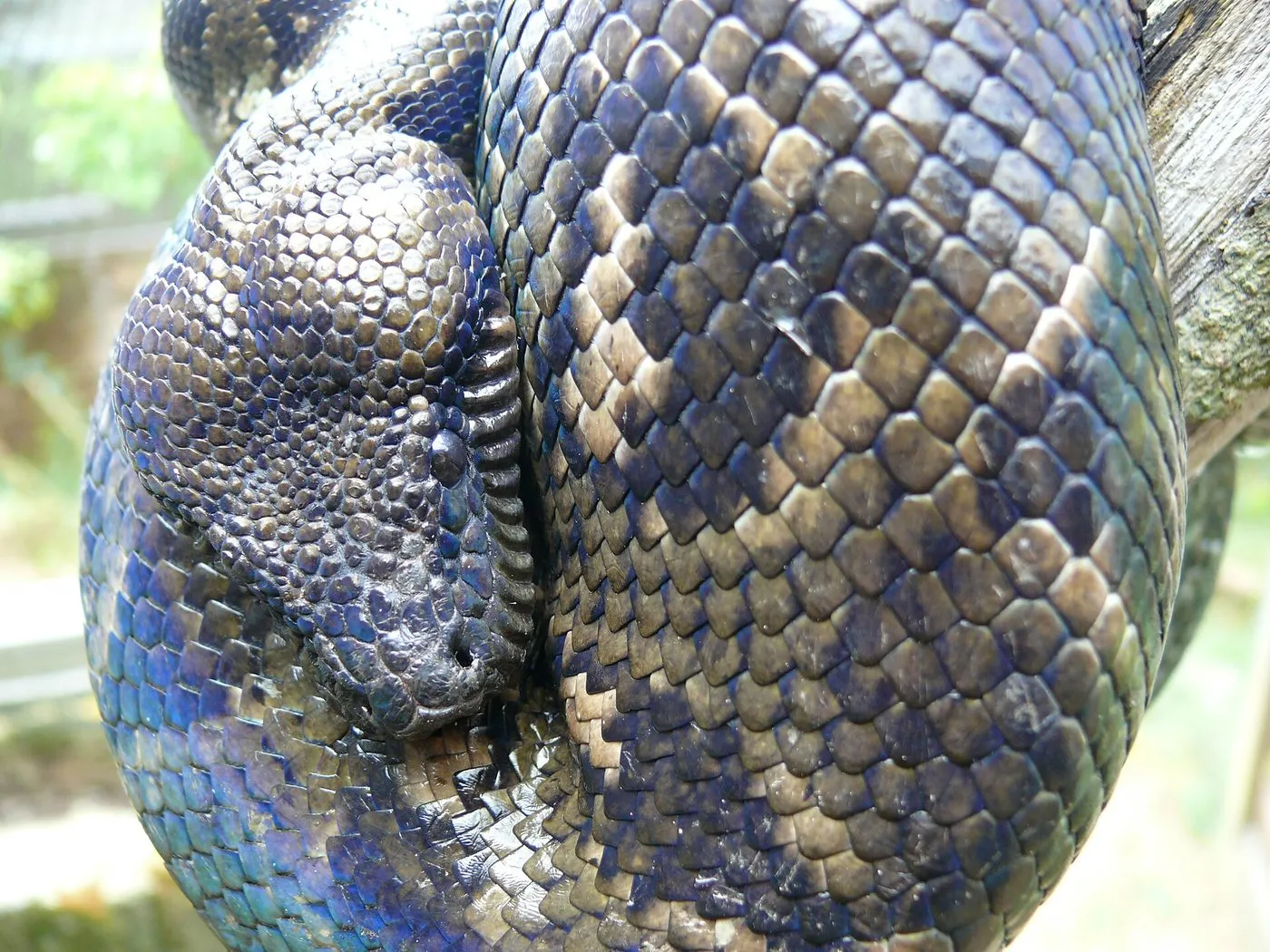
Madagascar tree boa
Sanzinia madagascariensis
An arboreal boa from Madagascar. Beyond husbandry, what matters most here are CITES and provenance documents.
- Group
- Snake
- Level
- Advanced
- Origin
- Madagascar
Where the species comes from
- World region
- Madagascar
- Countries
- Eastern and northwestern Madagascar
- Habitat
- Humid forest, forest edges and riverside woodland
The app does not yet hold an origin entry for this species. The distribution given here comes from the specialist literature.
The natural habitat is the yardstick for how you furnish an enclosure. Knowing where an animal comes from is knowing why it needs heat zones, hides and a particular humidity.
Husbandry at a glance
The same details appear in the animal’s profile inside the app.
- Enclosure
- A tall, roomy enclosure with sturdy branches.
- Temperature
- Basking spot 29–31 °C, cool side 23–25 °C.
- Humidity
- Around 60–80 %, with good air movement.
- Lighting
- Bright daylight and UVB are advisable.
- Substrate
- A moisture-buffering soil and bark mix.
- Furnishings
- Sturdy horizontal branches, cork, plants and hides.
- Water
- Fresh water; gentle misting cycles.
- Feeding
- Thawed rodents or birds.
- Behaviour
- Arboreal and nocturnal.
- Handling
- Handle rarely and with care.
- Cohabitation
- Keep singly.
- Health
- Breathing, dehydration, skin and prehensile tail.
- Seasonal cycle
- No winter rest: Madagascar has a rainy and a dry season instead of winter. A drier, slightly cooler phase of six to eight weeks with a night-time drop to 20–22 °C matches the native climate and initiates the mating season.
- Safety
- Check species protection and proof-of-origin papers.
Legal position in Switzerland
No permit foreseen
No permit required. The species does not belong to any of the groups listed in Art. 89 of the Swiss Animal Welfare Ordinance
No certificate of competence foreseen
No proof of competence required. It is only demanded for the animals named in Art. 89 of the Ordinance
Species protection applies
CITES Appendix I: The strictest protection status. Commercial international trade in wild-caught animals is prohibited; only registered captive breeding with complete papers is permitted
Minimum enclosure dimensions
Annex 2, table 5 of the Animal Welfare Ordinance does not prescribe centimetres but multiples of body length. For this species, item 43a (Small and medium pythons and boas): floor area 1 × 0.5 body lengths, height 0.75 body lengths. The floor area applies to at most two animals; each further animal requires an additional 0.5 × 0.2 body lengths.
For this group, body length means the total length, from snout to tail tip. The largest animal in the enclosure is what counts. The enclosure may not be smaller even if fewer animals live in it than the table names.
| Total length | At least |
|---|---|
| 120 cm | 120 × 60 × 90 cm |
| 150 cm | 150 × 75 × 113 cm |
| 180 cm | 180 × 90 × 135 cm |
| 210 cm | 210 × 105 × 158 cm |
Animals may temporarily be kept in smaller enclosures: for quarantine, for the treatment of illness and injury, for acclimatisation, for breeding and rearing, and for winter or cold dormancy or aestivation (preliminary remark D on reptiles).
This is the legal lower limit, not a recommendation. An enclosure that meets exactly these dimensions is permitted, but not good for that reason. The details under “Husbandry at a glance” describe how the enclosure should be furnished, not how small it may be.
What the enclosure must provide
Provide species-appropriate heat and light zones, UV-B where needed, suitable substrate, retreats, climbing or digging options, water and natural rest periods.
Paperwork
For Appendix I the CITES papers are mandatory and must be kept complete. Without them neither purchase nor transfer is lawful. Check the origin before buying.
These details are a guide, not legal advice. Binding information comes from the cantonal veterinary office; the text of the ordinance is what counts. More on the legal position

