
SpeciesIndian stick insect
Indian stick insect
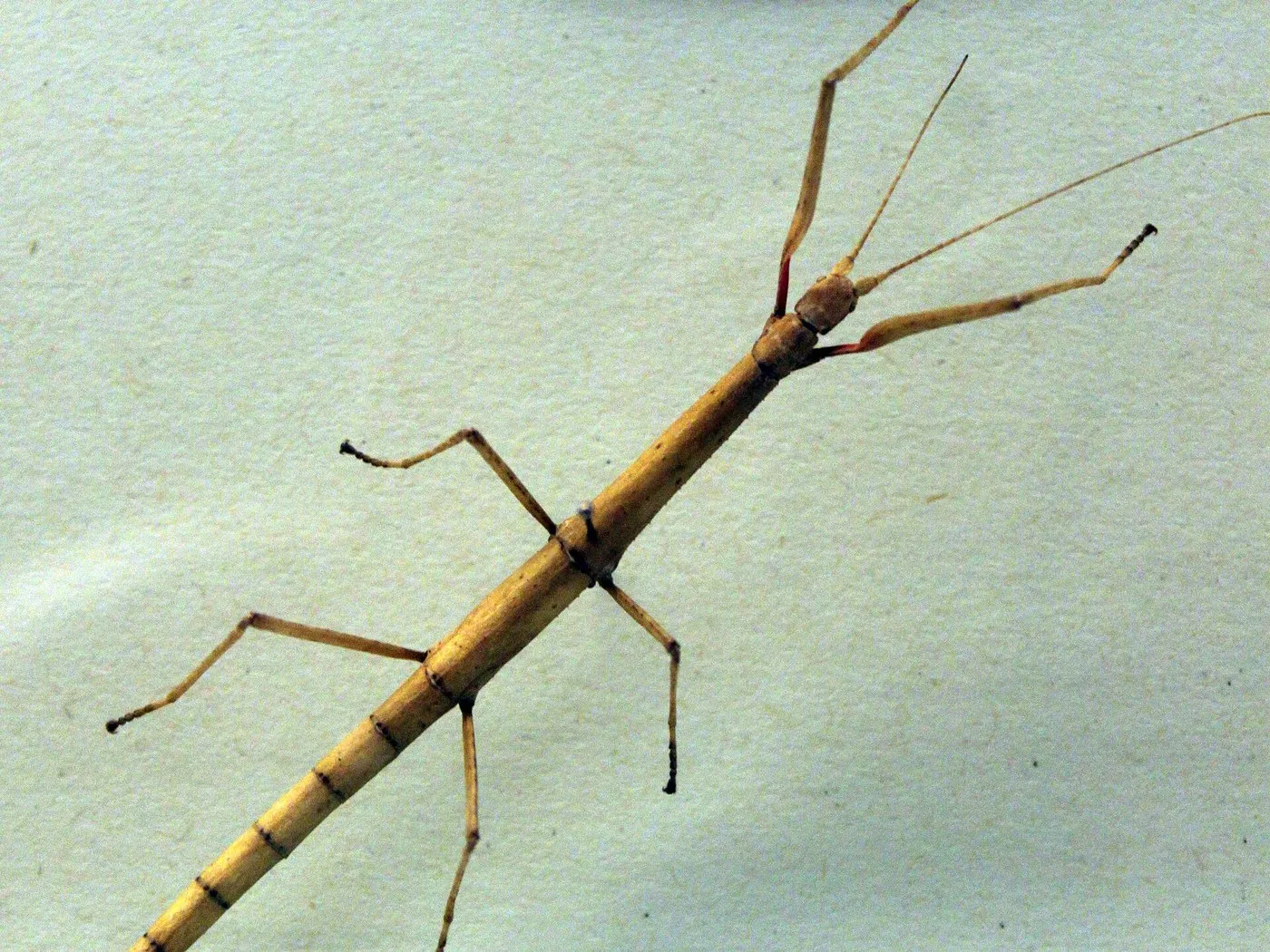
Carausius morosus
The classic first terrarium animal: undemanding, harmless and easy to keep in any room. It reproduces without a male and that is exactly the problem if animals get out.
- Group
- Phasmid
- Level
- Beginner
- Origin
- South Asia
Where the species comes from
- World region
- South Asia
- Countries
- Southern India; spread worldwide as a captive animal
- Habitat
- Scrub and forest edges
The app does not yet hold an origin entry for this species. The distribution given here comes from the specialist literature.
The natural habitat is the yardstick for how you furnish an enclosure. Knowing where an animal comes from is knowing why it needs heat zones, hides and a particular humidity.
Husbandry at a glance
The same details appear in the animal’s profile inside the app.
- Enclosure
- 30 × 30 × 40 cm for a group.
- Temperature
- 20–25 °C, room temperature is enough.
- Humidity
- 60–70 %, mist every two days.
- Lighting
- No special lighting needed.
- Substrate
- Kitchen paper or coco humus.
- Furnishings
- Browse in a vase, a mesh lid to hang from.
- Water
- Droplets on the foliage.
- Feeding
- Bramble, raspberry or ivy leaves, fresh all year.
- Behaviour
- Nocturnal, motionless on twigs during the day.
- Handling
- Possible; the animals are calm but fragile.
- Cohabitation
- Group keeping is the norm.
- Health
- Very robust. Moulting problems only if the enclosure is too low.
- Seasonal cycle
- No rest period.
- Safety
- No permit required. The species reproduces without males: A single escaped animal can found a population. Freeze surplus eggs, let nothing out.
Legal position in Switzerland
No permit foreseen
No permit required. The species does not belong to any of the groups listed in Art. 89 of the Swiss Animal Welfare Ordinance
No certificate of competence foreseen
No proof of competence required. It is only demanded for the animals named in Art. 89 of the Ordinance
No CITES listing
Not listed in the CITES appendices: Import and transfer require no species-protection papers. Keep the proof of purchase nonetheless
Minimum enclosure dimensions
The Animal Welfare Ordinance does not apply to these animals: under Art. 1 it governs the handling of vertebrates, cephalopods and reptant decapods. There are therefore no minimum dimensions. Housing, climate and places to retreat should still match the needs of the species. The cantonal veterinary office can say whether cantonal rules apply, for example to venomous animals.
What the enclosure must provide
Escape-proof closure and enough height for moulting. Freeze surplus eggs: a single escaped female can reproduce without a mate.
Paperwork
Keep a receipt bearing the scientific name. Never release invertebrates into the wild: Even seemingly harmless species can establish themselves.
These details are a guide, not legal advice. Binding information comes from the cantonal veterinary office; the text of the ordinance is what counts. More on the legal position

